Boards
The Lovemachine Zambal
Reswell5 min
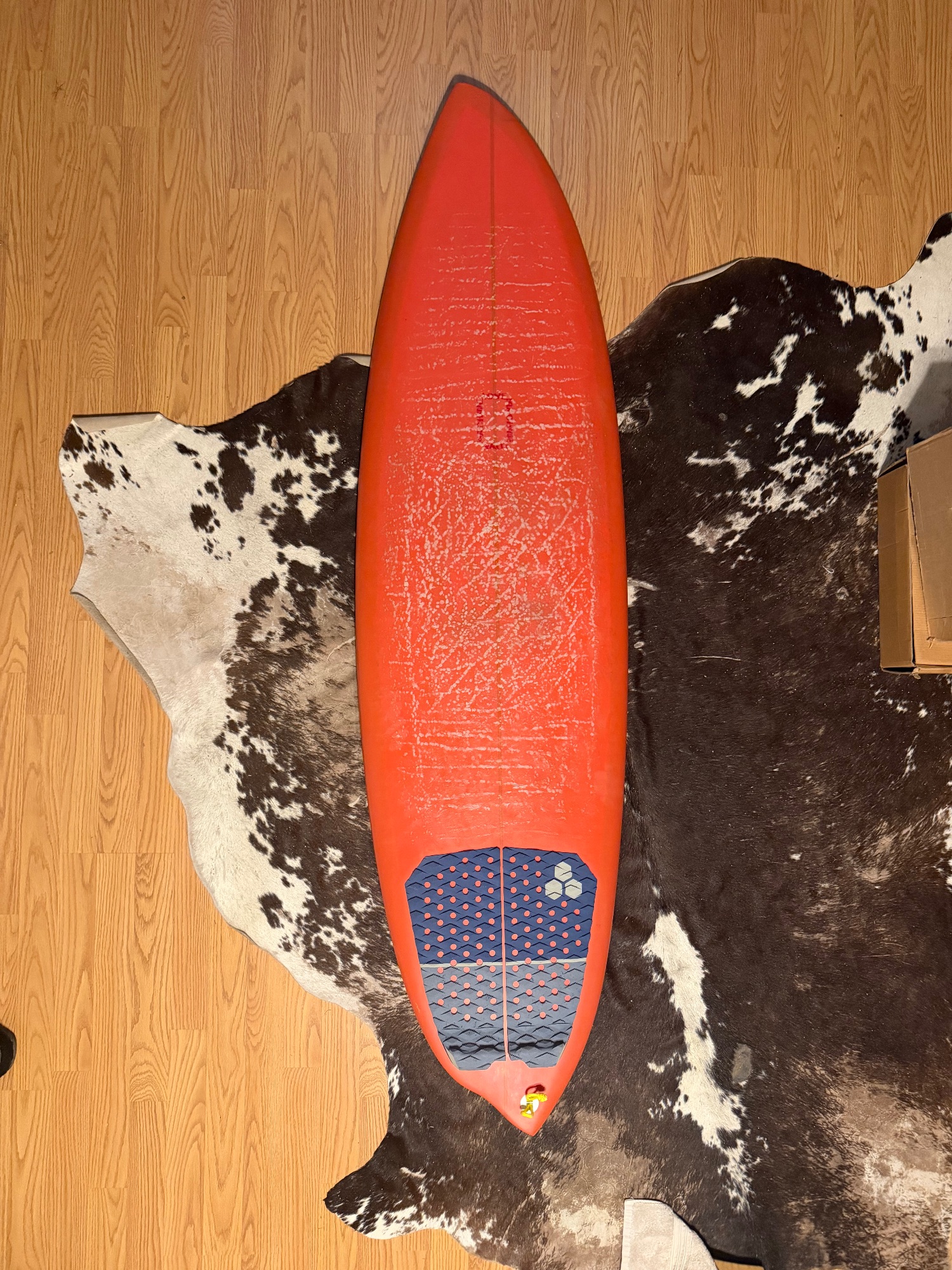
Ryan Lovelace shaped this one for William Aliotti. It is wide and flat, so it planes early, and the outline is handed. The long rail lives under your toes. The shorter, rounder rail does the carving. Aliotti has been taking it through the kind of Indo, California, and European summer most of us actually get. It also rides smaller than the tape.
This is the fast fish Lovemachine built around an asymmetric outline. Wide and flat. You can ride it as a twin, or as a twin on the toe with a quad on the heel. William Aliotti has been using it in ordinary Indo, California, and European summer. The days that are good enough without being perfect.
It still planes like a fish
Most fishes give you easy paddle and early speed, then they ask you to surf a little slower. They like to skate. They do not always like a hard rail.
Ryan Lovelace wanted both. He kept the board wide and low so it still gets up and goes, then he split the outline so each rail has a job. Toes are for speed. Heels are for the carve.
Why one rail is longer
This is a true asymmetric, not a fish with a little tweak. The long, wider, straighter rail sits under your toes. That side is flatter, so it stays on top of the water and keeps that skatey speed once you are moving.
The heel rail is shorter, rounder, and more hollowed out. That is the side that can take the speed you just made, set an edge, and still pop out of the lip. You stay high and fast on your toes, and you can still bury it when you want a real carve.
The bottom is a strong double concave that still feels mellow, with a wider single concave up front that helps it paddle and lock in forward. Nothing about the hull is trying to be clever. It just wants to go, and then it wants to keep going.
It makes speed before you ask for it
The first thing you notice is not the outline. It is how little time the board spends getting going. A few strokes, a little face, and it is already planing. Once it is moving, it holds that speed instead of dying in the flats or getting weird when you turn.
That is why Aliotti has been using it as an everyday board in the surf most of us actually get. California. European summer. Average Indo. Not just the days you would film. The days where a thin shortboard feels late and a classic keel fish feels clumsy.
Twin, or twin on the toe and quad on the heel
You can order it as a straight twin, or as a twin on the toe and a quad on the heel.
The pure twin is looser and a little more committed. Less drag, more skate, more of that fish snap.
The mixed setup keeps twins under your toes and adds trailers on the heel. That extra hold on the carve rail is there so the board forgives you a bit. You still get the free feeling on your toes. If you have not ridden an asymmetric much, or your local gets a little steep, start with the twin and quad.
Long rail on your toes
Regular or goofy, frontside or backside, the long side always goes on your toe. Lovelace builds a regular foot and a goofy foot version because the outline is handed. Put it the wrong way around and it will feel backwards. Too much rail where you want to skate, not enough where you want to bury it.
It also rides smaller than it measures. Think of the length more like your shortboard than a traditional fish. If you usually go long for paddle, you can stay closer to your shortboard length and still have the planing area.
Sizes
Lovemachine lists these as length, width, thickness, and volume.
5'5 x 18 3/4 x 2 5/16, 24.8L 5'7 x 18 3/4 x 2 3/8, 26.4L 5'9 x 18 7/8 x 2 5/8, 30.39L 5'11 x 19 x 2 5/8, 31.4L 6'1 x 19 3/4 x 2 3/4, 35L
The range is short on purpose. These are not mid lengths wearing a fish label. They are short, wide, and lively.
Who it is for
This board makes sense if you want fish speed without a keel that only wants to draw lines. It is happy in everyday beachbreak, a point, or Indo reef that is good without being perfect. You do have to commit to the stance. Long rail on the toe, every time. And if you like twins but sometimes want a little more hold when you lay it over, the mixed fin option is there.
Skip it if you want a board you can share or flip without thinking, or if you just want a mellow keel fish or a regular shortboard. This shape wants you to mean it on each rail.
The simple version
Lovelace took a category everyone knows and asked it to do a different job. The Zambal is a fish only because it is wide, flat, and fast. The real idea is the split outline. Skate on one side, carve on the other. And a hull that makes speed so quickly you stop thinking about generating it.
If you have been looking at Lovemachine twins and wondering which one works on mixed summer days, this is the one Aliotti has been answering that with.
A few practical answers
What is it?
An asymmetric fish from Lovelace's Lovemachine line. Wide and flat for speed, with a shorter, deeper heel rail for carves and the lip.
Twin or quad?
Either. Pure twin, or twins on the toe and a quad on the heel for a little more grip when you lean it over.
How do you stand on it?
Long side on your toes. Regular or goofy, frontside or backside. The two versions are opposites.
What size?
It rides smaller than the tape. Start near your shortboard length, not your fish length. Stock runs from 5'5 at 24.8L to 6'1 at 35L.
What waves?
Everyday surf. California and European summer, plus the same kind of Indo. It is built to make and keep speed when the wave is not doing that for you.
See one on Reswell
There is a used Lovemachine Zambal on the marketplace when they show up.